Tuesday, September 14, 2021

Billings, Montana


With a population of 117,116 as of 2020, Billings is the largest city in the U.S. state of Montana. It is the capital of Yellowstone County and the largest city in the Billings Metropolitan Area, which has a projected population of 184,167 in 2020. It has a trade area of nearly 500,000 square kilometres.

Because of its quick expansion after its establishment as a railroad town in March 1882, Billings was dubbed the "Magic City." Billings is the trading and distribution centre for much of Montana east of the Continental Divide, northern Wyoming, and western North Dakota and South Dakota, with one of the largest trade regions in the country. For most of the same area, Billings is also the biggest retail destination.

The city has experienced and continues to experience rapid expansion and a robust economy; it has experienced and continues to experience the most growth of any city in Montana. Parts of the metro area are experiencing rapid expansion. Lockwood, an eastern suburb, grew at a pace of 57.8% from 2000 to 2010, the most of any Montana municipality. Billings escaped both the economic slump and the housing bust that afflicted the rest of the country from 2008 to 2012. The city accommodates a variety of conventions, concerts, athletic events, and other rallies, with more hotel accommodations than any other town within a five-state region. The city's growth rate remained high throughout the shale oil boom, thanks to the Bakken oil development in eastern Montana and western North Dakota, the greatest oil discovery in US history, as well as the Heath shale oil discovery just north of Billings. Although the city is expanding, the rate of growth has slowed significantly as oil prices have fallen in recent years.

Zoo Montana, Yellowstone Art Museum, Pompey's Pillar, Pictograph Cave, and Chief Plenty Coups State Park are among the attractions in and surrounding Billings. The Beartooth Highway connects Red Lodge and Yellowstone National Park and includes the Little Bighorn Battlefield National Monument, Bighorn Canyon National Recreation Area, Red Lodge Mountain Resort, and the Beartooth Highway. Yellowstone National Park's northeast gate is around 100 miles from Billings. 

Frank Sinatra: Strangers in the Night


Frank Sinatra made the song popular in 1966, but it was first offered to Melina Mercouri, who declined because she thought a man's vocals would better complement the music.  Bert Kaempfert created the song "Strangers in the Night," which was written in English by Charles Singleton and Eddie Snyder. It was first recorded as part of the instrumental soundtrack for the film A Man Could Get Killed by Kaempfert under the title "Beddy Bye."  

It was the title song for Frank Sinatra's 1966 album Strangers in the Night, which became his most commercially successful album, reaching #1 on both the Billboard Hot 100 and the Easy Listening charts. The song also charted at No. 1 in the United Kingdom.

At the Grammy Awards in 1967, Sinatra's recording earned him the Grammy Awards for Best Male Pop Vocal Performance and Record of the Year, as well as a Grammy Award for Best Arrangement Accompanying a Vocalist or Instrumentalist for Ernie Freeman.

The single was recorded one month before the rest of the album, on April 11, 1966. Glen Campbell played rhythm guitar and Hal Blaine played drums on the album. Blaine claims that he rearranged the renowned drum rhythm from the Ronettes' "Be My Baby" in a slower and softer arrangement. 

The Forbidden City: Beijing, China


The Forbidden City is a palace complex located in Beijing's Dongcheng District, in the Imperial City of Beijing. The 54-acre Zhongshan Park, the sacrificial Imperial Ancestral Temple, the 171-acre Beihai Park, and the 57-acre Jingshan Park are among the many lavish imperial gardens and temples that surround it.

From the Ming dynasty (from the Yongle Emperor) through the end of the Qing dynasty, between 1420 and 1924, the Forbidden City served as the old Chinese imperial palace and winter residence of the Emperor of China. For over 500 years, the Forbidden City was the home of Chinese emperors and their families, as well as the ceremonial and political core of the Chinese government. The Palace Museum has been in charge of the Forbidden City since 1925, and its large collection of artwork and antiquities was built on the imperial treasures of the Ming and Qing dynasties. In 1987, the Forbidden City was designated as a UNESCO World Heritage Site.

There are 980 structures in total, with 8,886 rooms and a total area of 178 acres. The palace epitomizes the richness of the Chinese emperor's homes and traditional Chinese palatial architecture, and it has impacted cultural and architectural developments in East Asia and beyond. UNESCO has designated it as the world's biggest collection of surviving old wooden constructions. The Forbidden City has experienced an average of 14 million visitors per year since 2012, with more than 19 million in 2019. The market value of the Forbidden City has been estimated at US$70 billion, making it both the world's most valuable palace and the world's most valuable piece of real estate.

How Is Sound Measured?


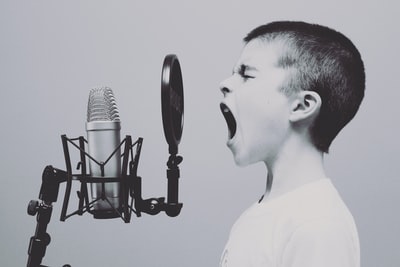
Sound is all around us, and it can be measured in order to inform and protect us, as some noises are dangerous. Loud noise, in fact, can be quite harmful to one's hearing.  Hearing loss can be caused by the degree of noise, the distance a person is from the noise (distance from the noise), and the amount of time they listen to it.

Sound is a form of energy that travels in waves and is quantified in terms of frequency and amplitude. The number of sound vibrations in one second is measured by frequency, which is expressed in Hertz (Hz). The decibel (dB) scale is used to measure amplitude, which is a measure of pressure or forcefulness. The louder a sound is, the greater its amplitude.

A logarithmic decibel scale differs from a linear scale in terms of measurement. For example, a 10-fold increase in sound pressure level is equal to a 10 dB rise on the decibel scale (SPL). Near silence is measured in decibels (dB), whereas a sound measured in decibels (dB) is 10 times louder. A sound with a decibel level of 20 is 100 times louder than relative silence. 

Where Did Wal-Mart Get It's Start?


Walmart Inc., headquartered in Bentonville, Arkansas, is an American multinational retail firm that operates a chain of hypermarkets (also known as super centers), cheap department stores, and grocery stores throughout the United States. Sam Walton launched the corporation in neighboring Rogers, Arkansas in 1962, and it was incorporated on October 31, 1969, under the Delaware General Corporation Law. Sam's Club retail warehouses are also owned and operated by the company. Walmart had 10,524 stores and clubs in 24 countries as of July 31, 2021, operating under 48 distinct names. In the United States and Canada, the corporation is known as Walmart, whereas in Mexico and Central America, it is known as Walmart de México y Centroamérica and in India, it is known as Flipkart Wholesale. Chile, Canada, and South Africa are all completely owned subsidiaries. Since August 2018, Walmart has held only a minority part in Walmart Brazil, which was rebranded Grupo Big in August 2019, with private equity firm Advent International owning the other 80% of the company's shares.

According to the Fortune Global 500 list for 2020, Walmart is the world's largest company by revenue, with $548.743 billion. With 2.2 million employees, it is also the world's largest private employer. The Walton family controls the corporation, hence it is a publicly traded family-owned enterprise. Through their holding company Walton Enterprises and their individual assets, Sam Walton's heirs own over 50% of Walmart. Walmart was the leading grocery retailer in the United States in 2019, with US operations accounting for 65 percent of Walmart's total sales of US$510.329 billion.

On July 2, 1962, Walton opened the first Wal-Mart Discount City store at 719 W. Walnut Street in Rogers, Arkansas. Its design was inspired by Ann & Hope, which Walton visited in 1961, as did Kmart founder Harry B. Cunningham. The building is now occupied by a hardware store and an antiques mall, while the company's "Store #1" has since expanded to a Super center several blocks west at 2110 W. Walnut Street. Within its first five years, the company expanded to 18 stores in Arkansas and reached $9 million in sales. In 1968, it opened its first stores outside Arkansas in Sikeston, Missouri and Claremore, Oklahoma.

Alaska Flag


On a dark blue background, the state flag of Alaska features eight gold stars forming the Big Dipper and Polaris. The Big Dipper is an asterism in the constellation Ursa Major that represents a bear, which is a native Alaskan mammal. The stars on the flag can be utilized by the inexperienced to locate Polaris and ascertain true north, which differs significantly from magnetic north.

Benny Benson of Seward produced the design, which was chosen from over 700 entries in a 1927 contest. Alaska's flag was voted fifth in design quality out of 72 Canadian province, US state, and US territory flags in a poll performed by the North American Vexillological Association in 2001. It came to a close behind the flags of New Mexico, Texas, Quebec, and Maryland.

The Alaska Department of the American Legion sponsored a territorial flag design contest for Alaskan children from seventh grade (age 12-13) to twelfth grade (age 17-18) thirty-two years before Alaska became a state.

In 1927, the contest committee chose the design of thirteen-year-old orphan Benny Benson to represent the Territory of Alaska's future flag. Benson was a resident at the Jesse Lee Home for Children in Seward, Alaska. Since the area was purchased from Russia in 1867, Alaskans had solely flown the American flag. Benson's artwork was picked from over 700 other submissions from students across the country. The territorial seal, the midnight sun, the northern lights, polar bears, and/or gold pans appeared in the majority of the other entries. Benson was given a $1,000 prize and an engraved watch as a token of his accomplishment. 

The Hoosier State


Indiana is a U.S. state in the Midwestern United States. It is the 38th-largest by area and the 17th-most populous of the 50 United States. Its capital and largest city is Indianapolis. Indiana was admitted to the United States as the 19th state on December 11, 1816. It is bordered by Lake Michigan to the northwest, Michigan to the north, Ohio to the east, the Ohio River and Kentucky to the south and southeast, and the Wabash River and Illinois to the west.

Hoosier is the official demonym for a resident of the U.S. state of Indiana. The origin of the term remains a matter of debate within the state, but "Hoosier" was in general use by the 1840s, having been popularized by Richmond resident John Finley's 1833 poem "The Hoosier's Nest". Anyone born in Indiana or a resident at the time is considered to be a Hoosier. Indiana adopted the nickname "The Hoosier State" more than 150 years ago.

"Hoosier" is used in the names of numerous Indiana-based businesses and organizations. "Hoosiers" is also the name of the Indiana University athletic teams and seven active and one disbanded athletic conferences in the Indiana High School Athletic Association have the word "Hoosier" in their name. As there is no accepted embodiment of a Hoosier, the IU schools are represented through their letters and colors alone. In addition to universal acceptance by residents of Indiana, the term is also the official demonym according to the U.S. Government Publishing Office.