Friday, July 9, 2021

Usain Bolt


Usain Bolt is a retired Jamaican sprinter who is largely regarded as the best sprinter of all time. He holds world records in the 100 m, 200 m, and 4 x 100 m relay.

Bolt is the first sprinter to have won the Olympic 100 m and 200 m titles in three consecutive Olympics (2008, 2012 and 2016). He also won two gold medals in the 4 x 100 relay. He rose to international prominence following his double sprint victories in world record times at the 2008 Beijing Olympics, making him the first individual to hold both marks since fully automatic timing became obligatory.

Eleven-time World Champion, he won gold medals in the 100 m, 200 m, and 4 x 100 m relays at the World Championships from 2009 to 2015, with the exception of a 2011 100 m false start. He is the World Championships' most successful male athlete. Bolt is the first athlete to win four World Championship medals in the 200 meters and is one of the most successful sprinters in history, having won three titles in the 100 meters.

Bolt broke his second 100 m world record of 9.69 seconds in 2009 with a time of 9.58 seconds - the largest improvement since electronic timing began. He has twice set the world record for the 200 meters, clocking 19.30 in 2008 and 19.19 in 2009. He has aided Jamaica in setting three world records in the 4 x 100 meters relay, the most recent of which is 36.84 seconds set in 2012. Bolt's most successful event is the 200 meters, which he has won three Olympic and four World championships in. He had previously won multiple 200 m medals (including silver at the 2007 World Championships) and held the world under-20 and world under-18 records for the event until they were overtaken by Erriyon Knighton in 2021.

His sprinting accomplishments gave him the media moniker "Lightning Bolt," and he has received numerous accolades, including IAAF World Athlete of the Year, Track & Field Athlete of the Year, BBC Overseas Sports Personality of the Year (three times), and Laureus World Sportsman of the Year (four times). Bolt announced his retirement following the 2017 World Championships, when he placed third in his final solo 100 m race, withdrew from the 200 m, and failed to qualify for the 4100 m relay final. 

RMS Titantic


The RMS Titanic was a British passenger liner operated by the White Star Line. On 15 April 1912, she perished in the North Atlantic Ocean after colliding with an iceberg on her first journey from Southampton to New York City. Over 1,500 of the estimated 2,224 passengers and staff aboard died, making it one of the bloodiest sinkings of a single ship at the time and the greatest peacetime sinking of a superliner or cruise ship to date. With widespread public attention in the aftermath, the accident has subsequently inspired several artistic works and served as the inspiration for the disaster film genre.

RMS Titanic was the largest ship afloat when she began service and was the second of the White Star Line's three Olympic-class ocean liners. She was built in Belfast at the Harland & Wolff shipyard  Thomas Andrews, the shipyard's principal naval architect at the time, perished in the tragedy.

Titanic departed Southampton on 10 April 1912, calling at Cherbourg, France, and Queenstown, Ireland (now Cobh), before continuing west to New York. At 11:40 p.m. ship's time on 14 April, four days into the crossing and approximately 375 miles (600 kilometres) south of Newfoundland, she collided with an iceberg. The accident bent the hull plates inward along her starboard (right) side, exposing five of the ship's sixteen watertight compartments to the sea; she could only survive four floodings. Meanwhile, passengers and a small number of crew members were evacuated in lifeboats, the majority of which were launched half filled. Due to a "women and children first" practice for loading lifeboats, a disproportionate number of men were left onboard. At 2:20 a.m., she disintegrated and sank, with well over 1,000 people still aboard. The Cunard liner RMS Carpathia arrived just under two hours after Titanic sank, bringing an estimated 710 people aboard. 

The Declaration of Independence


The Declaration of Independence of the United States of America is the document adopted by the Second Continental Congress in Philadelphia, Pennsylvania, on July 4, 1776. The Declaration of Independence explains why the Thirteen Colonies at war with the Kingdom of Great Britain viewed themselves as thirteen independent sovereign republics free of British domination. These new states took a collective first step toward becoming the United States of America with the Declaration of Independence. New Hampshire, Massachusetts Bay, Rhode Island, Connecticut, New York, New Jersey, Pennsylvania, Maryland, Delaware, Virginia, North Carolina, South Carolina, and Georgia all signed the proclamation.

The declaration was established to establish equal rights for all people, and if it had been intended for a specific group of people, it would have been labelled "rights of Englishmen." This line has been dubbed "one of the most well-known in the English language," as it contains "the most potent and momentous words in American history." The passage came to symbolize a moral standard for the United States to aspire to. This position was prominently supported by Abraham Lincoln, who regarded the Declaration as the bedrock of his political philosophy, arguing that it serves as a statement of ideas upon which the United States Constitution should be construed.

The Declaration of Independence sparked the creation of other comparable papers in other countries, the earliest being the 1789 Declaration of United Belgian States, which was issued during the Austrian Netherlands' Brabant Revolution. It also served as the major model for a number of independence declarations throughout Europe and Latin America, as well as Africa (Liberia) and Oceania (New Zealand) in the first half of the nineteenth century. 

Hugo Chavez


Hugo Chávez was a Venezuelan politician who served as the country's president from 1999 to 2013, with the exception of a brief spell in April 2002. Chávez was also the founder and head of the political party the Fifth Republic Movement from 1997 to 2007, when it united with numerous other organizations to establish the United Socialist Party of Venezuela (PSUV), which he led until 2012.

Venezuela suffered a democratic backslide during Chávez's presidency, as he repressed the press, manipulated electoral laws, and jailed and banished government adversaries. His utilization of enabling acts and the employment of propaganda by his government sparked controversy. During Chávez's administration, the country's homicide rate increased significantly, as did corruption within the police and government.

Internationally, Chávez allied himself with Fidel and then Ral Castro's Marxist–Leninist governments in Cuba, as well as with the socialist governments of Evo Morales in Bolivia, Rafael Correa in Ecuador, and Daniel Ortega in Nicaragua. His presidency was viewed as a manifestation of Latin America's socialist "pink tide." Chávez defined his policies as anti-imperialist, as he was a strong critic of US-supported neoliberalism and laissez-faire capitalism. 

H.G. Wells


H. G. Wells' The Time Machine is a science fiction novella written in the frame narrative style. It was published in 1895. The book is often credited with popularizing the concept of time travel through the use of a vehicle or gadget to travel forward or backward in time purposefully and selectively. Wells developed the term "time machine," which is now nearly commonly used to refer to such a vehicle or technology.

Set in Victorian England, Wells' novel is considered in modern times as a commentary on the era's growing inequality and class enmity, which he predicted would result in the creation of the Eloi and Morlock races, with terrible consequences for human evolution's future. Wells' picture of the Eloi as a species living in abundance and abandonment is said to have been inspired by the utopian romance novel News from Nowhere (1890), albeit Wells' universe is noticeably more cruel and violent. Wells stated in his 1931 prologue to the book that The Time Machine appeared to be "a very undergraduate performance to its now mature writer as he rereads it," however he maintains that "the writer feels no sorrow for this adolescent attempt." However, critics have lauded the novella's treatment of its thematic concerns, with Mariana Warner stating that the novella was the most significant contribution to understanding fragments of desire prior to Sigmund Freud's The Interpretation of Dreams, with the novel "how close he felt to the melancholy seeker after a door that he once opened on to a luminous vision and could never find again."

The Time Machine has been adapted into two feature films, two television adaptations, and numerous comic book adaptations. Additionally, it has served as an indirect inspiration for numerous additional works of fiction in a variety of media formats. 

Maria Sharapova

Maria Yuryevna Sharapova was a professional tennis player in Russia. Despite the fact that she represented Russia in the Women's Tennis Association (WTA), she has lived in the United States since 1994 and is a permanent resident. Sharapova competed on the WTA Tour from 2001 to 2020, during which time she was ranked world No. 1 in singles five times for a total of 21 weeks. She is one of only ten women in history to achieve the career Grand Slam, and the only Russian to do so. She has also won an Olympic medal, winning a silver in the women's singles event at the 2012 Summer Olympics in London. Sharapova has an unusual amount of longevity in tennis, with various analysts and former players hailing her as one of the best competitors in the sport.

Sharapova first reached world No. 1 on August 22, 2005, at the age of 18, becoming the first Russian female tennis player to do so, and she held the position for the fifth time for four weeks from June 11 to July 8, 2012. She won five Grand Slam championships in total, including two at the French Open and one each at the Australian Open, Wimbledon, and the US Open, for a total of 36 victories, including the WTA Finals in her first year of 2004. She was also a three-time doubles champion.


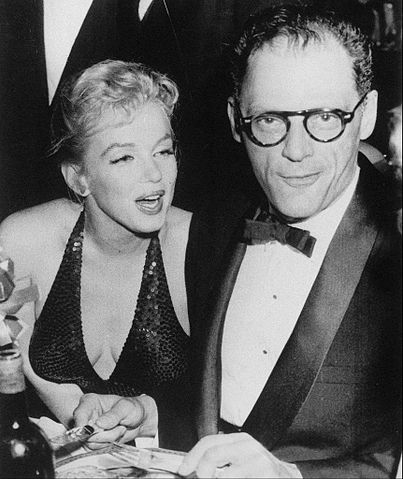
Marilyn Monroe


Marilyn Monroe was an actress, model, and singer from the United States. She became one of the most prominent sex symbols of the 1950s and early 1960s, indicative of the era's sexual revolution, due to her humorous "blonde bombshell" roles. Although she was only a leading lady for a decade, her films generated $200 million (equivalent to $2 billion in 2020) by the time she died in 1962. Long after her death, she remained a huge pop cultural phenomenon. Monroe was ranked sixth on the American Film Institute's 1999 list of the Golden Age of Hollywood's finest female screen icons.

Monroe's turbulent personal life drew considerable attention. She battled drugs and bipolar disorder. Her high-profile marriages to retired baseball star Joe DiMaggio and author Arthur Miller both ended in divorce. On August 4, 1962, she died at the age of 36 of a barbiturates overdose at her Los Angeles home. Although various conspiracy theories have been developed in the decades since her death, her death was declared a suicide.